Online payments are now a normal part of everyday life. People purchase products from international websites, subscribe to streaming platforms, pay for online tools, and run digital advertising campaigns using online payment methods. While this digital convenience has made transactions faster and easier, it has also increased concerns about payment security and card fraud.
Many users hesitate to enter their real debit or credit card details on unfamiliar websites. Data breaches, unauthorized transactions, and subscription traps have made online shoppers more cautious about how they pay online.
This is where a virtual card for online payment becomes extremely useful. A virtual card provides a secure and flexible way to complete transactions on the internet without exposing your primary banking card. It works just like a normal debit or credit card but exists only in digital form.
With a virtual card, users can generate card details instantly and use them for online payments anywhere that accepts card transactions. This added layer of protection makes virtual cards one of the safest ways to handle online purchases, subscriptions, and digital services.
What is a Virtual Card for Online Payment?
A virtual card is a digitally generated payment card that includes a card number, expiration date, and CVV, similar to a traditional credit or debit card. The key difference is that a virtual card does not exist physically and is mainly designed for internet transactions, making it a convenient Virtual Card for Online Payment.
Many banks and fintech platforms now allow users to create virtual cards through their mobile apps or online dashboards. Once generated, the card can immediately be used for purchases on e-commerce websites, subscription platforms, and digital service providers.
Virtual cards are particularly useful because they allow users to control how and where the card is used. Some virtual cards are temporary or disposable, meaning they can expire after a single transaction or within a set time period. This greatly reduces the risk of payment fraud.
People searching for virtual credit cards, prepaid virtual cards, disposable cards, or digital payment cards are usually looking for a Virtual Card for Online Payment that provides a secure payment solution for online transactions.
Why Virtual Cards Are Becoming Popular
The growing popularity of virtual cards is largely driven by the need for safer and more controlled online payments. Traditional cards were designed for both physical and online transactions, but virtual cards are specifically optimized for digital use.
One of the biggest advantages is improved security. Since virtual cards are separate from your main bank card, your actual financial information remains protected during online transactions.
Another major benefit is payment control. Many virtual card services allow users to define spending limits, expiration dates, and merchant restrictions. This makes it easier to prevent unwanted charges or misuse.
Virtual cards also offer instant accessibility. Users can generate a new card within seconds without waiting for a bank to issue and deliver a physical card. This convenience makes them ideal for quick online purchases or temporary payments.
Common Use Cases of Virtual Cards for Online Payment
Virtual cards are highly versatile and can be used for many types of online transactions. Below are some of the most common situations where people prefer using virtual cards instead of traditional payment methods.
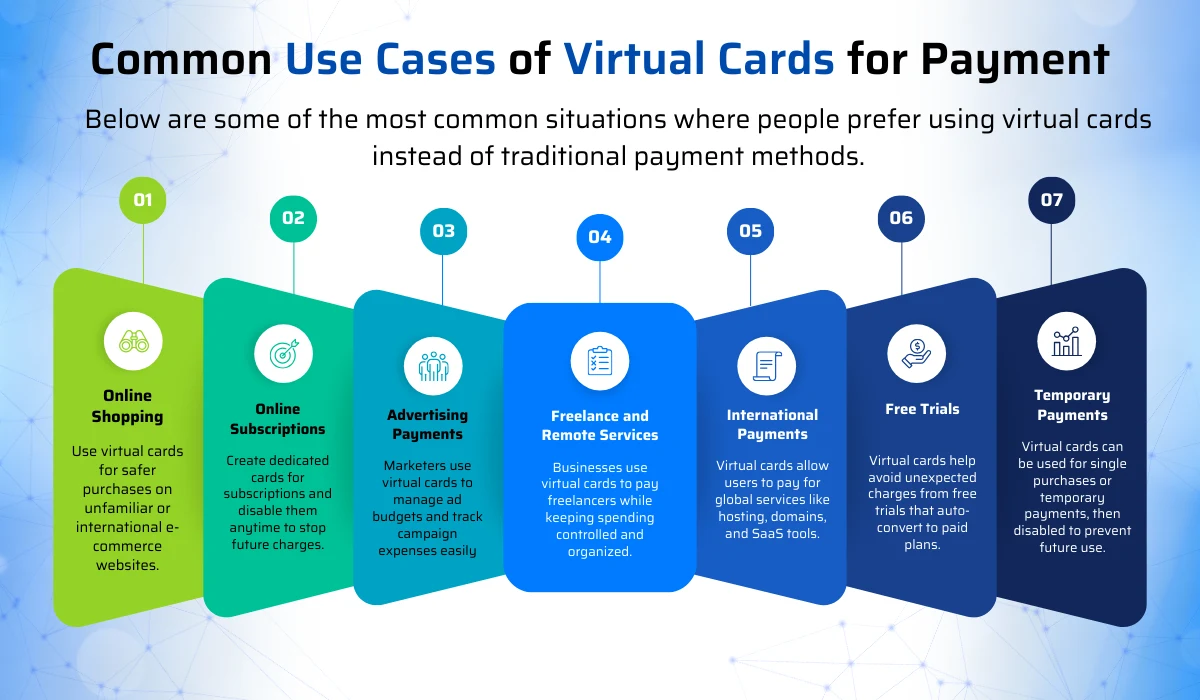
Online Shopping on E-commerce Websites
Online shopping is one of the most common reasons people use virtual cards. When purchasing products from international websites, many users feel uncomfortable entering their real credit card information, especially if the website is unfamiliar.
Using a virtual card allows shoppers to create a separate payment method specifically for that purchase. Even if the website stores the card information or experiences a security issue, the user’s primary banking card remains safe.
Virtual cards also allow users to set exact spending limits that match the order amount. This prevents the card from being used for additional unauthorized transactions.
People frequently use virtual cards for shopping on:
- International e-commerce marketplaces
- Online clothing and fashion stores
- Electronics retailers
- Digital product marketplaces
This added security makes virtual cards a practical option for frequent online shoppers.
Paying for Online Subscriptions
Subscription services have become a large part of the modern digital economy. Many platforms now operate on monthly or yearly billing models, including streaming services, productivity tools, and software platforms.
While subscriptions offer convenience, they can also lead to unexpected charges if users forget to cancel them.
A virtual card can help manage subscription payments more effectively. Users can create a dedicated card for a specific subscription and control how long it remains active.
For example, a virtual card can be used for:
- Streaming services and entertainment platforms
- Software tools and SaaS platforms
- Online learning platforms
- Cloud storage services
If the user decides to stop the subscription, they can simply disable or delete the virtual card. This prevents further billing without needing to go through complicated cancellation procedures.
Running Online Advertising Campaigns
Digital marketers and businesses frequently rely on virtual cards to manage advertising payments. Online advertising platforms require a payment method to run campaigns, and managing multiple campaigns with a single card can become difficult.
A Virtual Card for Online Payment provide a more organized way to handle advertising budgets.
Marketers often create separate cards for different campaigns, clients, or platforms. This approach offers several advantages:
- Better control over campaign budgets
- Easier tracking of marketing expenses
- Reduced risk of payment interruptions
- Improved organization for agencies managing multiple clients
Using virtual cards for advertising payments helps businesses maintain better financial control while running marketing campaigns.
Paying for Freelance and Remote Services
The rise of remote work has increased the demand for online payments. Businesses frequently hire freelancers or purchase services such as design, development, writing, and marketing from remote professionals.
Virtual cards simplify the process of paying for these services. Instead of sharing the main company card with multiple team members, businesses can generate separate virtual cards for different expenses.
This approach offers several benefits:
- Better expense management
- Reduced risk of unauthorized spending
- Clear transaction records for accounting
- Controlled spending limits for each project
Companies that work with distributed teams often rely on virtual cards to manage online service payments efficiently.
Making International Online Payments
Many digital platforms operate globally and require international card payments. However, not all users have access to payment methods that work across international platforms.
Virtual cards help bridge this gap by providing a payment option that can be used globally for many online services.
Users commonly rely on virtual cards for:
- Domain and hosting services
- International software subscriptions
- Online tools and automation platforms
- Global marketplaces and digital services
Using Free Trials Without Risk
Many online services offer free trials but require users to enter card details before activating the trial period. Once the trial ends, the service often converts into a paid subscription automatically.
This can lead to unwanted charges if the user forgets to cancel before the trial expires.
Using a Virtual Card for Online Payment allows users to try new services without worrying about unexpected payments. Since the card can be temporary or limited, the platform cannot charge it once it expires or is deleted.
Key Features of Virtual Cards
Virtual cards are designed specifically for secure digital transactions. Several features make them particularly effective for online payments.
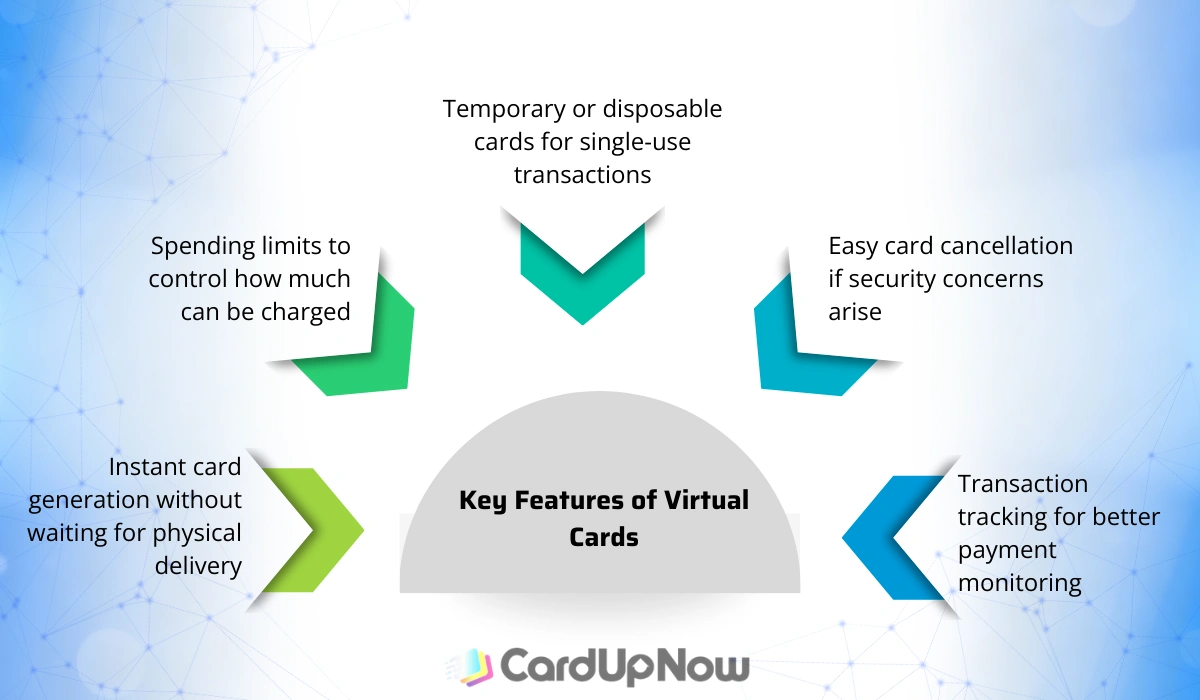
Some of the most important features include:
- Instant card generation without waiting for physical delivery
- Spending limits to control how much can be charged
- Temporary or disposable cards for single-use transactions
- Easy card cancellation if security concerns arise
- Transaction tracking for better payment monitoring
Are Virtual Cards Safe for Online Payments?
Virtual cards are generally considered safer than traditional cards when used for online payments. Since the card details are separate from the primary bank account, the risk of major financial loss is significantly reduced, which is why many people prefer using a Virtual Card for Online Payment
If a virtual card is compromised or used on a suspicious website, it can simply be canceled without affecting the user’s main account.
Many virtual card providers also use additional security technologies such as encryption, tokenization, and real-time fraud monitoring. These layers of protection help prevent unauthorized transactions and detect suspicious activity quickly. So, you are safe.
Who Should Use Virtual Cards?
Virtual cards are useful for a wide range of users who frequently make online payments. Anyone who wants more security and control over digital transactions can benefit from using them.
They are particularly useful for:
- Online shoppers purchasing from international websites
- Freelancers paying for digital tools and services
- Digital marketers running advertising campaigns
- Businesses managing online expenses
- Individuals using multiple online subscriptions
As digital payments continue to grow, more users are turning to virtual cards as a safer alternative to traditional payment methods.
Final Thoughts
A virtual card for online payment provides a simple and secure way to handle digital transactions. Instead of sharing your primary credit or debit card across multiple websites, a virtual card allows you to create a separate payment method specifically for online use.
This extra layer of protection helps prevent fraud, control spending, and manage online payments more effectively. From online shopping and subscriptions to advertising and international services, virtual cards offer flexibility and convenience for modern digital payments.
As online commerce continues to expand, virtual cards are expected to become an essential tool for secure internet transactions. Using them can significantly improve both payment security and financial control in today’s digital economy.