Many people face the same issue again and again with online payments. The card has balance, the details are correct, and yet the platform refuses to accept it. Sometimes the card works for a small payment but fails when you try to add it properly to an account. Other times, it gets rejected immediately with no clear reason.
In most cases, this problem has nothing to do with money or user error. It happens because the card was never designed to stay connected to a platform. That gap between “can pay” and “can stay linked” is exactly why linkable cards exist.
The Real Problem Is Not Payment, It’s Connection
Online platforms do not treat all cards the same way. A simple payment only checks if the card can process a transaction. Linking a card is different. Platforms want to save the card, verify it multiple times, and rely on it for future charges.
When a card cannot handle those repeated checks, it gets rejected during the linking process. This is why many users feel confused. From their side, the card looks fine. From the platform’s side, the card does not behave like a stable payment source.
A linkable card is designed to meet this expectation. It allows the platform to store the card details and use them again without breaking the connection.
What Is a Linkable Card?
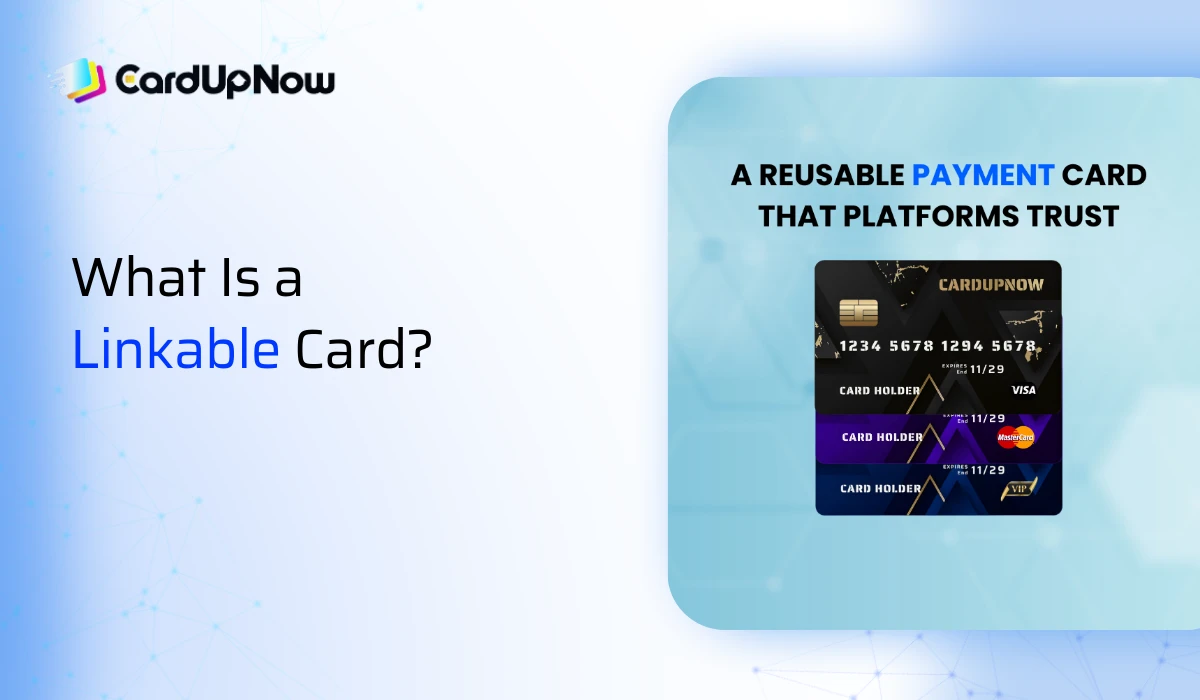
A linkable card is a virtual card that can be securely added to online platforms and kept there for ongoing use. Instead of being treated as a one-time payment method, it behaves like a reusable card that platforms trust.
Once linked, the card remains active for recurring charges, verification checks, and future payments. The card details stay consistent, which helps platforms recognize it as a reliable billing method rather than a temporary card. You can say it is a card that does not disappear after one successful payment.
Why Regular Virtual Cards Fail to Link
Most virtual cards are created for short-term use. They are perfect for quick purchases but struggle when a platform tries to save them. Some cards expire quickly, some block merchant-level linking, and others fail repeated authorization checks.
When a platform cannot verify the card again later, it automatically rejects the linking request. This is why a card may work for one transaction but fail the moment you try to add it to an account or subscription. So, these failures are not random. They happen because the card was never built for long-term platform use.
Key Features That Make a Card “Linkable”
A card becomes linkable based on how it behaves over time, not because of a label. Platforms look for consistency and reliability before allowing a card to stay connected.
A proper linkable card usually offers stable card details, support for repeated authorization checks, and compatibility with recurring billing systems. It remains usable without frequent replacement and does not trigger security blocks during verification.
Look for these features on your card so that it allows platforms to treat the card as a dependable payment source instead of a temporary solution.
How CardUpNow Provides a Reliable Linkable Card
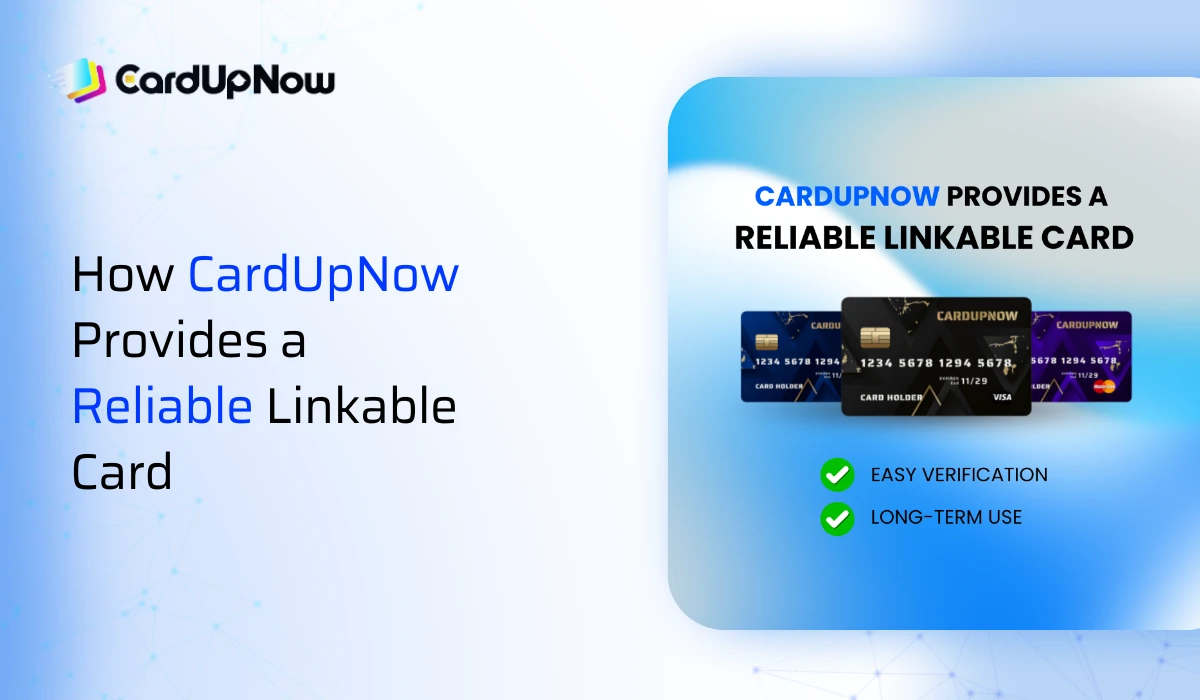
CardUpNow focuses on issuing cards that are meant to be used long term. Instead of disposable cards that work once and fail later, CardUpNow cards are designed to support stable linking with online platforms.
Users can add their CardUpNow card, complete the required verification, and continue using the same card without constantly replacing it. This reduces failed payments and removes the frustration of repeated card updates.
Linkable Card vs Non-Linkable Cards
The difference between these two types of cards becomes clear once you compare how they behave inside platforms.
| Feature | Linkable Card | Non-Linkable Card |
| Can be added to platforms | Yes | Often rejected |
| Supports recurring charges | Yes | Usually no |
| Passes repeated verification | Yes | Fails over time |
| Card detail stability | High | Often temporary |
| Long-term usability | Designed for ongoing use | Meant for short-term payments |
| Need for frequent replacement | Rare | Very common |
This difference explains why many users keep switching cards. The issue is not the platform. It is the card type.
The Card That Actually Stays Connected
Payment problems often feel unpredictable, but they usually follow the same pattern. When a card is not designed to be linked, platforms push it away during verification or future billing checks.
A linkable card removes that friction. It stays connected, stays usable, and works quietly in the background without constant errors. For users who depend on stable online payments, choosing a linkable card is less about convenience and more about reliability.
FAQs About Linkable Card
What does it mean when a card is linkable?
A linkable card is a virtual or physical card that can be securely connected to an online platform or payment system, and stay saved there for future transactions. Unlike cards used only once, linkable cards remain active for recurring charges, verification checks, and ongoing billing, which is why platforms accept them for long-term use.
Why can’t I link my card to apps like Cash App?
There are several reasons your card may not link: the platform may not support that card type (like some prepaid cards), the issuing bank might block linking with payment apps, or there could be incorrect details entered during setup. Double-check the card information and ensure the card is supported by the platform.
Can a credit or debit card be linked to more than one account?
Most platforms allow only one active linked card at a time per account. If you want to use a different card, you often need to remove the current one first and then add the new one. Policies may differ between services, but generally a card can’t be actively linked to two accounts simultaneously.
Are linkable cards better than non-linkable cards for recurring payments?
Yes. Linkable cards are built for ongoing use, meaning platforms can save and reuse them for subscription charges, billing cycles, and other repeated transactions. Non-linkable cards may work for single purchases but can fail when a service tries to charge them again later.
Is it safe to link my card to online platforms?
Linking cards to trusted platforms is generally safe, especially if you use services with strong security measures like encryption and two-factor authentication. However, you should always monitor your linked cards, enable added security where possible, and avoid linking cards on unregulated or unfamiliar sites.