Managing employee spending is not a simple task. Teams still rely on personal cards, shared company cards, or slow reimbursement processes that create confusion for everyone involved. Employees hesitate before making purchases, managers lose visibility, and finance teams spend hours reconciling transactions that could have been clean from the start.
As teams become more remote and flexible, the way companies handle employee payments needs to evolve too. This is where virtual cards for employees start to make real sense, not as a finance buzzword, but as a practical tool for everyday work.
What Are Virtual Cards for Employees?
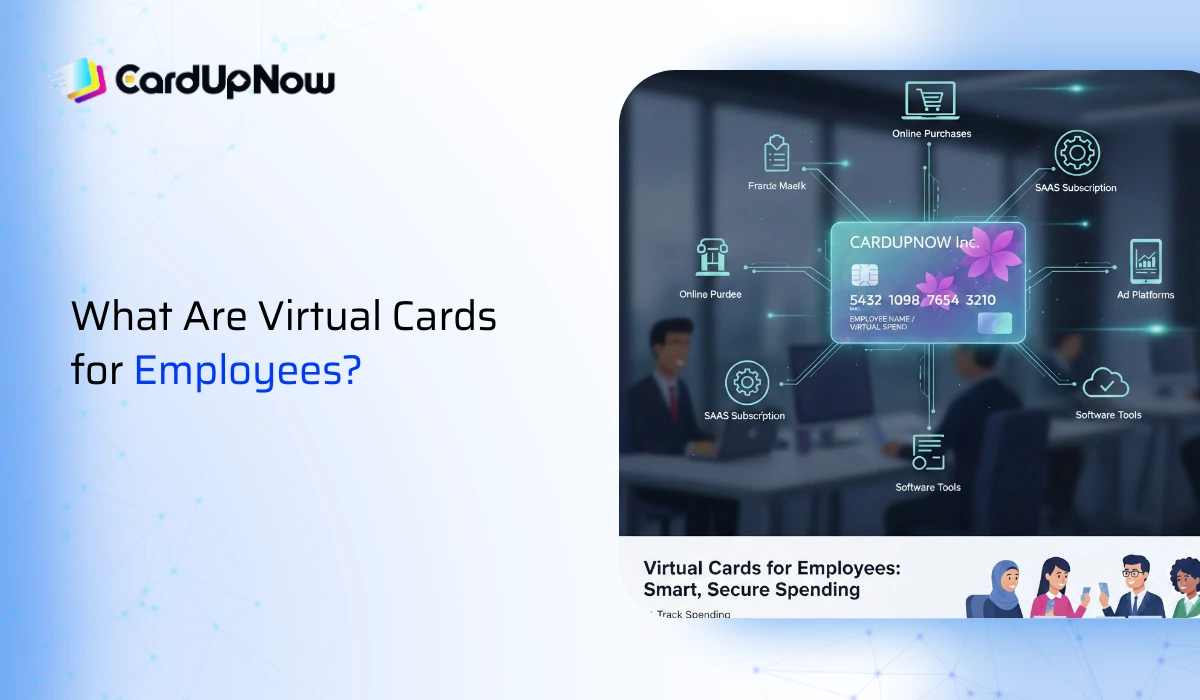
A virtual card for employees is a digital payment card issued specifically for work-related spending. Instead of passing around physical cards or asking employees to pay out of pocket, companies can assign virtual cards for specific tasks, tools, or budgets.
These cards can be used for online purchases, subscriptions, software tools, advertising platforms, and other business expenses. Each card exists independently, which means spending can be tracked clearly without mixing personal and business transactions.
Unlike traditional corporate cards, virtual cards are designed for flexibility. They can be issued quickly, limited to certain uses, and disabled when no longer needed.
Why Traditional Employee Card Systems Fall Short
Many companies already know that reimbursements and shared cards are inefficient, but existing corporate card programs do not always solve the problem. Most traditional systems come with long onboarding processes. They often require company registration documents, full KYC checks, and bank integrations before a single card can be issued. This makes them unsuitable for small teams, fast-moving startups, and online businesses that need immediate access to tools.
Another issue is usability. Many employee card programs are built primarily for finance departments. Employees end up waiting for approvals or dealing with complex rules just to buy basic software or run ads.
These systems also struggle with modern work setups. Remote employees, freelancers, and short-term contractors rarely fit neatly into corporate card structures.
Real Use Cases: How Teams Use Virtual Cards for Employees
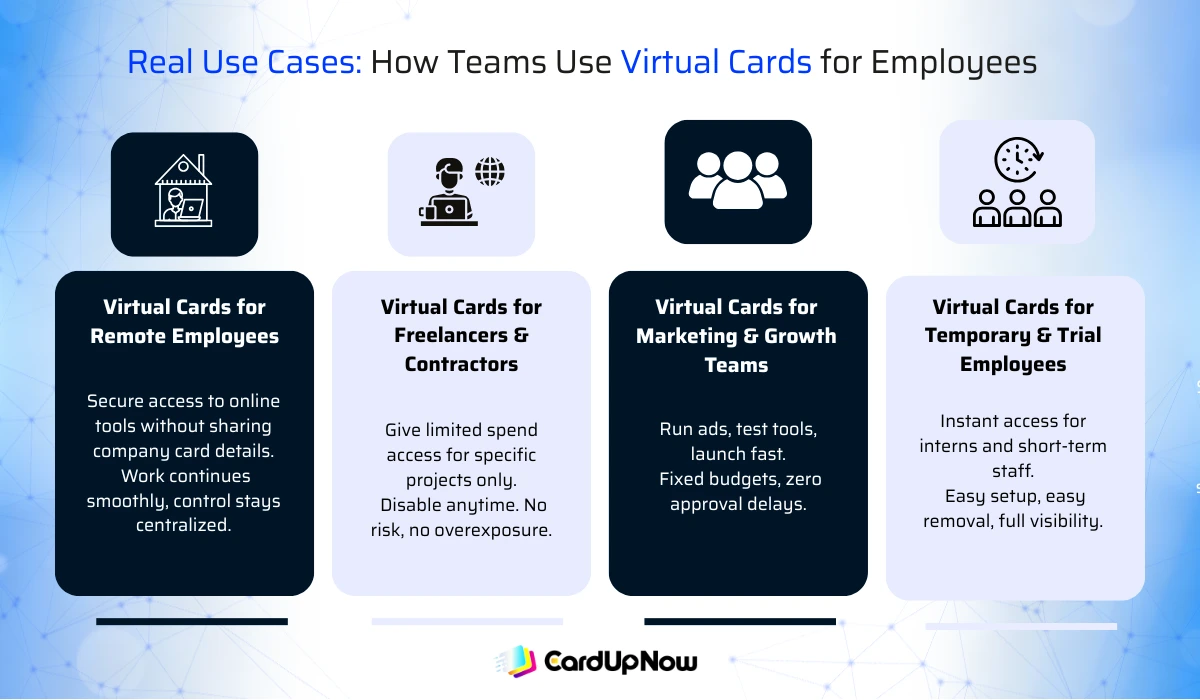
Virtual cards become truly valuable when you look at how teams use them in daily operations.
Virtual Cards for Remote Employees
Remote teams depend heavily on online tools. From project management software to cloud services, employees need the ability to pay quickly without exposing company card details in emails or chat messages.
A virtual card assigned to a remote employee allows them to access the tools they need while keeping spending transparent. The company stays in control, and the employee works without interruption, regardless of location.
Virtual Cards for Freelancers and Contractors
Freelancers often need temporary access to paid tools, platforms, or services. Adding them to company bank accounts or sharing main card details creates unnecessary risk.
With virtual cards, freelancers can be given limited spending access for a specific task or project. Once the work is complete, the card can be disabled. This keeps payments clean and reduces dependency on trust alone.
Virtual Cards for Marketing and Growth Teams
Marketing teams move fast. They test new tools, launch ad campaigns, and experiment with platforms regularly. Waiting for finance approvals or new cards slows growth.
Virtual cards allow marketers to manage ad spend, tool subscriptions, and trial services without bottlenecks. Budgets stay defined, and failed experiments do not turn into accounting problems.
Virtual Cards for Temporary and Trial Employees
Interns, probationary hires, and short-term staff often need access to paid tools for a limited time. Issuing physical cards or handling reimbursements for short roles creates more work than value.
Virtual cards solve this neatly. Access can be granted instantly and removed just as easily. There is no long-term commitment, and spending remains visible from day one.
Why Virtual Cards Beat Reimbursements Every Time
Reimbursement systems place the financial burden on employees first. People hesitate before spending their own money, even for work-related needs. Delays in repayment create frustration and affect trust.
Virtual cards remove this friction. Employees pay directly using company-approved funds. Transactions are recorded automatically, which reduces paperwork and follow-ups. From a company perspective, virtual cards improve visibility. Each transaction is tied to a specific card and purpose, making audits and reviews far simpler.
When Virtual Employee Cards Make the Most Sense
Virtual cards are especially useful for teams that value speed and flexibility. Early-stage startups benefit from avoiding complex banking setups. Remote-first companies gain a cleaner way to manage global spending. Agencies handling multiple tools and clients can separate expenses without confusion. Online businesses testing new software avoid long-term commitments tied to traditional cards.
In these situations, simplicity matters more than rigid corporate structures.
Final Thoughts: Smarter Employee Spending Starts with Flexibility
Employee spending should support productivity, not slow it down. Virtual cards offer a practical middle ground between chaos and control. They allow teams to move quickly while keeping expenses organized and transparent.
As work continues to evolve, tools that adapt to flexible teams will always outperform systems built for rigid processes. Virtual cards are not just a finance feature anymore. They are becoming an essential part of how modern teams operate.
FAQ about Virtual Cards for Employees
Are virtual cards secure for employee spending?
Yes. Virtual cards are safer than shared company cards because each card has its own details and limits. Spending can be tracked in real time, and cards can be disabled instantly if needed.
Can virtual cards be used for freelancers or temporary employees?
Yes. Virtual cards are ideal for short-term roles. You can assign a limited card for a specific task and deactivate it once the work is done, without sharing main account details.
How do virtual cards differ from traditional corporate cards?
Traditional corporate cards involve long approvals and rigid setups. Virtual cards are faster to issue, fully digital, and easier to manage for online tools and employee expenses.