⏱ Estimated reading time: 7 min read
Online payments are part of everyday life now. People subscribe to streaming platforms, shop on global marketplaces, pay for digital services, and manage subscriptions from their phones. With this convenience comes a major concern: payment security.
Entering your real debit or credit card details on multiple websites can expose your financial information to fraud, data leaks, and unauthorized charges.
This is where a virtual card app becomes extremely useful. A virtual card app allows you to generate digital payment cards that work just like regular bank cards but exist only online. Instead of sharing your real card number, you can create a temporary or dedicated virtual card for each transaction.
This simple change can dramatically improve your online payment security while giving you better control over how your money is spent.
What Is a Virtual Card App?
A virtual card app is a digital platform that allows users to generate and manage virtual payment cards directly from their phone or computer.
These cards contain the same details as a traditional payment card:
- Card number
- Expiry date
- CVV security code
- Payment network such as Visa or Mastercard
Even though there is no physical plastic card, the virtual card works exactly the same for online transactions.
Instead of using your main debit or credit card everywhere, you can create a new virtual card inside the app and use that card number when making payments.
Why Virtual Card Apps Are Becoming Popular
Virtual card apps have gained popularity because they solve several common problems related to online payments. As digital shopping grows, people want more control, better security, and easier financial management. Let me share with you some of the main reasons users are switching to virtual card apps.
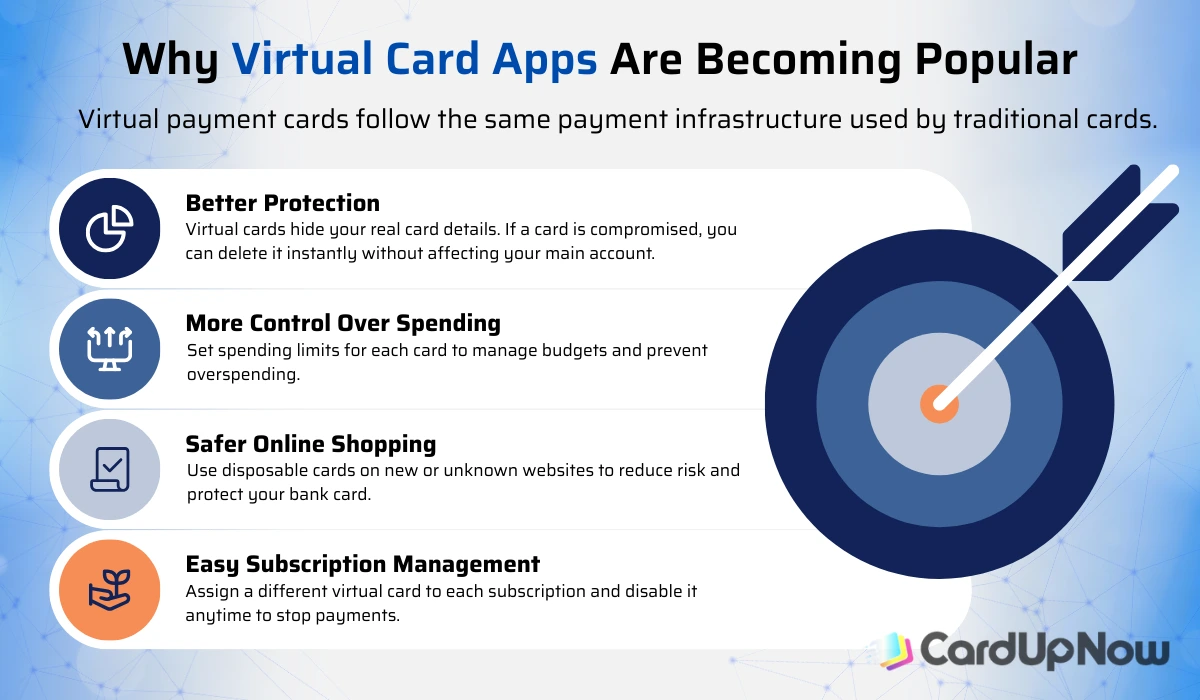
Better Protection for Online Payments
When you use a virtual card, merchants never see your real card details. If the virtual card information gets compromised, it can be deleted instantly without affecting your main account.
More Control Over Spending
Many card apps allow users to set spending limits for each card. This feature helps prevent overspending and keeps subscriptions under control.
Safer Payments on Unknown Websites
Shopping on new websites can sometimes feel risky. Virtual cards provide an extra layer of protection because you can use a disposable card instead of your real bank card.
Simple Subscription Management
Subscriptions are easier to manage when each service has its own virtual card. If you want to cancel a subscription, you can simply disable the card linked to it.
How a Virtual Card App Works
Virtual card apps connect users with payment networks and financial service providers that generate secure digital card numbers.
The process is usually very simple.
- Sign up for the virtual card app
- Create a new virtual card in the dashboard
- The app generates card details instantly
- Use the card number during online checkout
- Transactions are processed through the payment network
Many apps allow users to generate multiple cards, pause them, or delete them at any time.
This flexibility makes virtual cards ideal for modern digital payments.
Key Features to Look for in a Virtual Card App
Not all card apps offer the same experience. The best platforms provide advanced features designed for security and convenience.
Some important features include:
- Instant virtual card generation
- Disposable or one-time cards
- Spending limits for each card
- Real-time transaction alerts
- Ability to freeze or delete cards instantly
- Merchant specific card locking
These features give users more control over how their cards are used.
Virtual Cards vs Traditional Payment Cards
While both virtual and physical cards allow you to make payments, they differ in several important ways.
| Feature | Physical Card | Virtual Card |
| Format | Plastic card | Digital card |
| Availability | Issued by bank | Generated instantly |
| Security | Fixed card number | Often temporary |
| Replacement | Requires new card | Create new instantly |
| Control | Limited | Highly customizable |
Virtual cards are designed mainly for online payments, while physical cards remain useful for ATM withdrawals and in-store purchases.
Who Should Use a Virtual Card App?
Virtual card apps are helpful for many types of users.
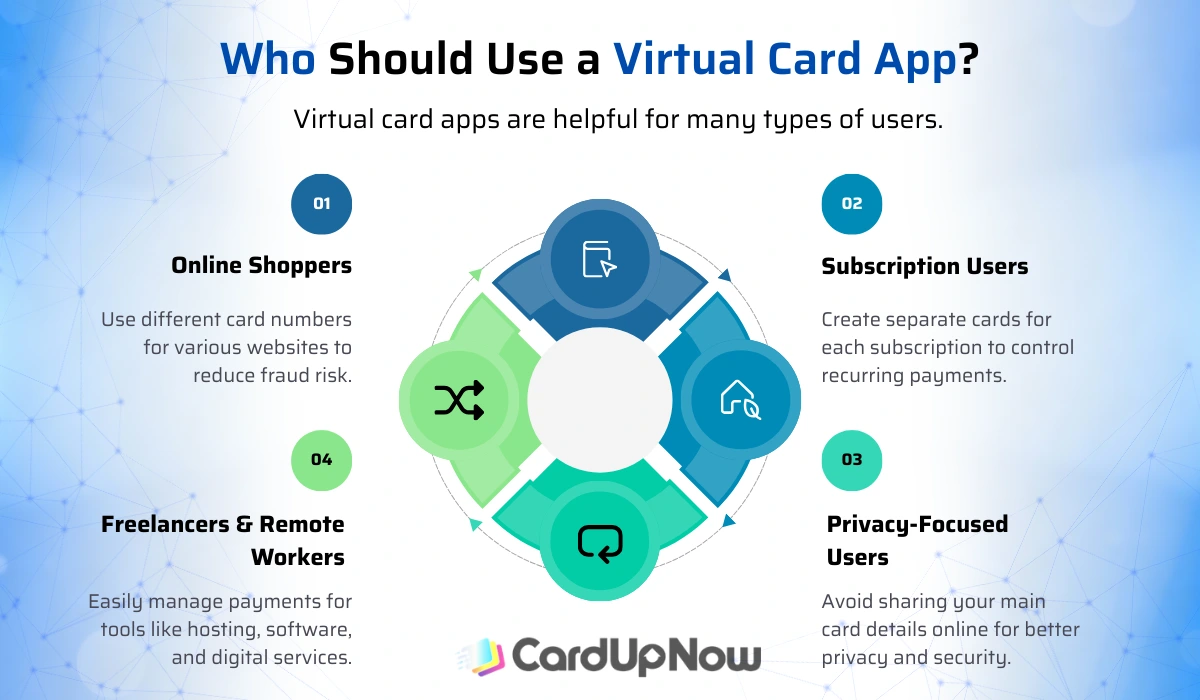
- Online Shoppers: Frequent online shoppers can reduce fraud risk by using a new card number for different websites.
- Freelancers and Remote Workers: Freelancers often pay for digital tools such as hosting, software, or design platforms. Virtual cards make it easier to track and manage these expenses.
- Subscription Users: People who subscribe to multiple services can create separate cards for each subscription to maintain better control.
- Privacy Focused Users: Users who prefer not to share their main card details online often rely on virtual cards for added privacy.
Are Virtual Card Apps Safe?
Most reputable virtual card apps use modern security technologies to protect users and transactions.
These security measures often include:
- End-to-end encryption
- Two factor authentication
- Fraud detection systems
- Instant card freezing options
Since virtual cards can be deleted or replaced quickly, they reduce the chances of long-term card data misuse. However, users should still choose trusted platforms and avoid sharing card information publicly.
How Virtual Card Apps Improve Online Payment Security
Traditional cards expose the same card number every time you make a purchase. If a website experiences a data breach, that card information may be compromised.
card apps reduce this risk by allowing users to generate unique card numbers for different transactions. This approach helps in several ways like:
- Limits exposure of your real bank card
- Reduces the impact of data breaches
- Prevents recurring unauthorized charges
- Makes subscription control easier
The Growing Future of Virtual Card Apps
Digital payments are expanding quickly, and virtual card apps are becoming an important part of modern finance. As more people shop online and manage subscriptions digitally, the need for secure and flexible payment methods continues to increase.
Financial technology companies are improving virtual card apps with smarter tools such as spending insights, subscription tracking, digital wallet integration, and advanced fraud detection. As online transactions keep growing, virtual card apps are expected to become a common solution for safer and more controlled digital payments.
Final Thoughts
A virtual card app offers a modern solution for secure and flexible online payments. Instead of relying solely on a physical debit or credit card, users can generate digital cards that provide better privacy and financial control.
With features like disposable cards, spending limits, and instant card management, virtual card apps are transforming the way people handle online transactions.
For anyone who frequently shops online, manages subscriptions, or values payment security, using a virtual card app can be a smart and practical step toward safer digital payments.
FAQ
What is a virtual card app used for?
A virtual card app is used to generate digital payment cards that can be used for online purchases, subscriptions, and digital services. Instead of using your main debit or credit card, the app creates a virtual card number that helps protect your real card details during transactions.
Are virtual card apps safe for online payments?
Yes, most virtual card apps are designed with strong security features such as encryption, two-factor authentication, and fraud monitoring. Since virtual cards can be paused or deleted instantly, they provide an extra layer of protection compared to using a permanent card number online.
Can a virtual card app replace a physical card?
A virtual card app can handle many online payments, but it does not fully replace a physical card in every situation. Virtual cards are mainly used for digital transactions, while physical cards are still needed for ATM withdrawals and some in-store purchases.