When you look at a debit card, credit card, or even a gift card, one of the most noticeable things is the long string of numbers printed on it. Many people use these numbers every day when making online payments, but not everyone understands what they actually represent.
So, what is a card number?
A card number is a unique sequence of digits printed on a payment card that identifies the card network, issuing bank, and the specific account linked to the card. It plays a central role in processing transactions and verifying payments whenever a card is used online or in stores.
These numbers are part of the payment infrastructure used worldwide. When you enter your card details on a website or swipe your card at a terminal, the card number helps payment networks route the transaction to the correct bank and account.
Understanding how card numbers work can help you better manage your payments and protect your financial information.
What Is a Card Number on a Debit Card?
A debit card number is the long set of digits printed on the front or back of a debit card issued by a bank.
When someone asks what is a card number on a debit card, they are referring to the primary number used to identify the cardholder’s account during transactions.
Unlike credit cards that borrow funds from a credit line, debit cards are connected directly to a bank account. When a payment is made using the debit card number, the money is deducted directly from the account linked to that card.
Debit card numbers are commonly used for:
Each debit card has a unique number that ensures transactions are routed to the correct account.
What Is a Card Number on a Bank Card?
A bank card is any payment card issued by a financial institution. This includes debit cards, credit cards, and prepaid cards.
When people search what is a card number on a bank card, they are usually referring to the main identification number assigned to the card by the issuing bank.
This number works as a digital identifier inside the global payment network. When a payment is initiated, the card number tells payment processors:
- Which bank issued the card
- Which payment network should process the transaction
- Which customer account should be charged
Without the card number, payment networks would not be able to correctly route and verify transactions.
What Is a Card Number for Visa?
Different payment networks issue cards using their own numbering systems. One of the most common networks is Visa.
If you are wondering what is a card number for Visa, it refers to the unique card number assigned to a Visa card.
Visa cards can be debit cards, credit cards, or prepaid cards. What makes them identifiable is the first digit of the card number.
Visa card numbers typically:
- Start with the number 4
- Contain 13 to 16 digits
- Follow the standard payment card structure used globally
When a transaction is initiated with a Visa card number, the payment request is routed through the Visa network before reaching the issuing bank. This allows merchants around the world to accept Visa cards quickly and securely.
What Is a Card Number on a Debit Card Used For?
A debit card number serves multiple functions in the payment process. It is not just a random set of digits. Each card number contains structured information that allows payment networks to identify the card and verify the transaction.
The debit card number is used for several purposes:
- Identifying the issuing bank
- Linking the card to a specific account
- Processing online transactions
- Verifying card ownership
- Routing payments through the correct card network
Whenever you type your debit card number during an online purchase, the payment system checks the number, validates it, and connects it to the appropriate bank.
Structure of a Card Number
A card number might look like a random string of digits, but it actually follows a structured format used by the global payment industry.
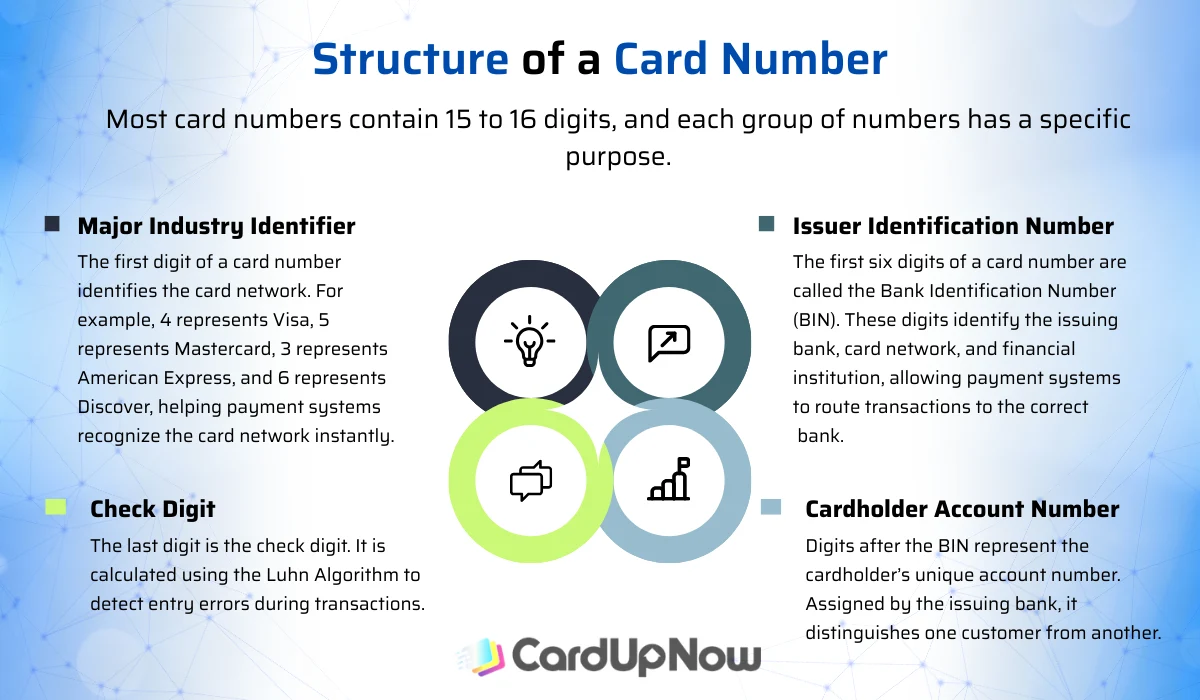
Most card numbers contain 15 to 16 digits, and each group of numbers has a specific purpose.
1. Major Industry Identifier
The first digit of the card number identifies the industry or network that issued the card. Common examples include:
- 4 for Visa
- 5 for Mastercard
- 3 for American Express
- 6 for Discover
This digit helps payment processors determine the card network instantly.
2. Issuer Identification Number (BIN)
The first six digits of the card number together form what is known as the Bank Identification Number or Issuer Identification Number.
These digits identify:
- The issuing bank
- The card network
- The financial institution responsible for the card
This allows payment systems to route transactions to the correct bank.
3. Cardholder Account Number
The digits following the BIN represent the cardholder’s unique account number. This portion of the card number is assigned by the issuing bank.
It distinguishes one customer account from another within the bank’s system.
4. Check Digit
The final digit of the card number is known as the check digit.
This digit is calculated using a mathematical formula called the Luhn algorithm. It helps detect errors when the card number is entered incorrectly during a transaction.
What Is a Card Number on a Gift Card?
Gift cards also have card numbers, although they are used slightly differently from debit or credit cards.
When someone asks what is a card number on a gift card, they are referring to the number that identifies the balance stored on that card.
Gift card numbers allow merchants to:
- Track the remaining balance on the card
- Verify the validity of the card
- Process payments using the stored funds
Gift cards usually also include a PIN or security code that must be entered during checkout.
Unlike debit cards, gift cards are typically not connected to a bank account. Instead, they contain prepaid value that can be spent until the balance reaches zero.
Where Can You Find the Card Number?
The card number is usually printed directly on the payment card.
Depending on the card design, you can find it in one of these locations:
- On the front of the card in raised or printed numbers
- On the back of the card for newer minimalist card designs
- Inside the bank’s mobile app for digital or virtual cards
Many banks now issue virtual cards that display the card number inside the banking app instead of on a physical card.
Card Number vs CVV vs Expiry Date
Many people confuse the card number with other information printed on the card. Each element has a different role in payment verification.
- Card Number: The card number identifies the cardholder account and routes transactions through payment networks.
- CVV: The CVV is a three or four digit security code used to verify that the person making the purchase physically possesses the card.
- Expiry Date: The expiration date indicates the period during which the card remains valid for transactions.
All three elements work together to ensure secure payments.
How Card Numbers Help Process Payments
When you enter your card number during an online purchase, several steps occur in the background.
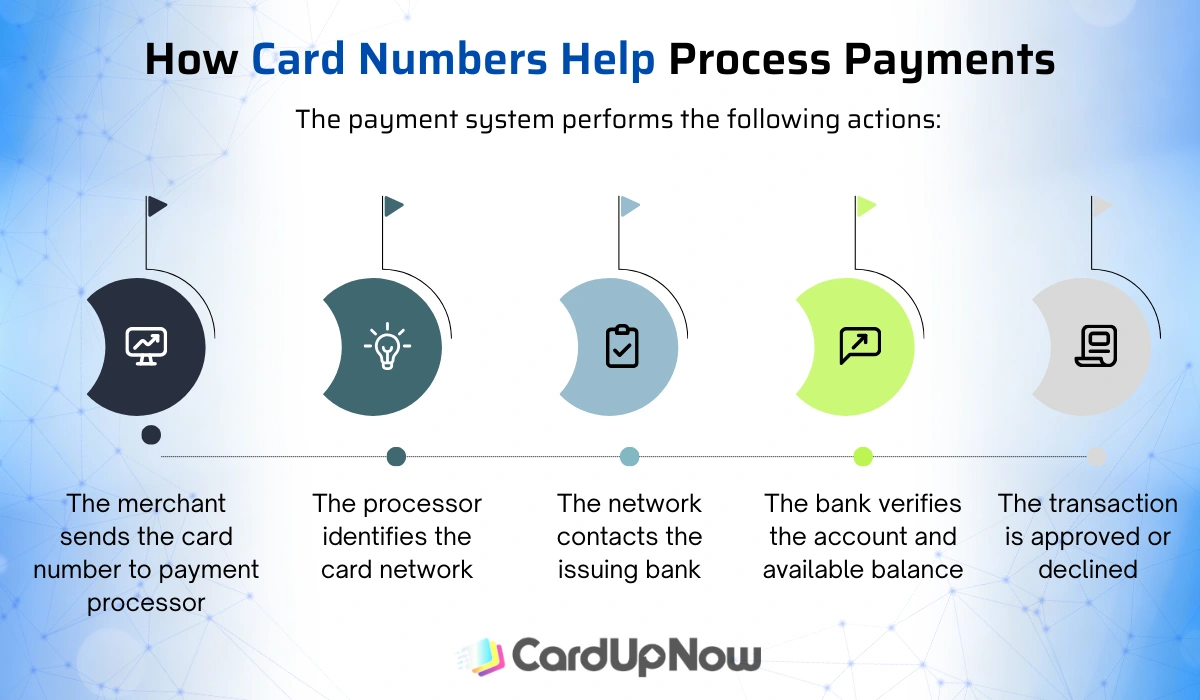
The payment system performs the following actions:
- The merchant sends the card number to the payment processor
- The processor identifies the card network
- The network contacts the issuing bank
- The bank verifies the account and available balance
- The transaction is approved or declined
This process usually takes only a few seconds but involves multiple financial systems working together.
Security Tips for Protecting Your Card Number
Because the card number is a key part of your payment identity, protecting it is important.
Here are some useful safety practices:
- Avoid sharing your card number on unsecured websites
- Use trusted payment gateways when shopping online
- Monitor bank statements regularly for suspicious transactions
- Avoid storing card details on unknown platforms
- Use temporary or virtual cards when available
These steps can help reduce the risk of fraud and unauthorized transactions.
The Role of Virtual Card Numbers
Many modern payment services now offer virtual cards. These cards generate unique card numbers that can be used for online payments. Virtual card numbers provide additional protection because they can be temporary or limited to a specific merchant.
Benefits of virtual card numbers include:
- Reduced exposure of your main card details
- Greater control over online subscriptions
- Ability to disable the card instantly
- Improved security for online shopping
This is why many people prefer using virtual cards for online payments today.

Card Number FAQs
How many digits does a card number have?
Most payment card numbers have 16 digits, but the standard allows 8 to 19. American Express cards use 15 digits, and some older Visa cards used 13. The length is set by the card network and the issuing bank, not by the cardholder.
What is the first digit of a Mastercard or American Express card number?
Mastercard numbers start with 5 (51 to 55) or with 2 (2221 to 2720). American Express numbers start with 34 or 37, Visa numbers with 4, and Discover numbers usually with 6. Payment forms use these first digits to show the right card logo as you type.
Is the card number the same as my bank account number?
No. The card number identifies the card within the payment networks, while your bank account number identifies the account the money comes from. One account can have several cards with different numbers, and a replaced card gets a new number while the account stays the same.
Does my card number change when the card is replaced?
It depends on why the card is replaced. A card reported lost, stolen, or compromised always gets a new number. A card renewed because it expired often keeps the same number with a new expiry date and CVV, but some issuers change the number at renewal too.
Can someone use my card number without the CVV?
Some websites and recurring payments do not ask for the CVV, so a stolen card number alone can still be misused. Watch your statements, turn on transaction alerts, and report any payment you do not recognise to your issuer right away. Paying online with a separate prepaid virtual card keeps your main card number out of sight.
Can I get a card number for online payments without a bank account?
Yes. CardUpNow gives you a prepaid virtual Visa card with its own card number, expiry date, and CVV. You buy the card and fund it yourself, for example with crypto, without ID verification, and use it anywhere online that accepts Visa.
Final Thoughts
A card number is much more than a random set of digits printed on a payment card. It is a structured identifier that connects your card to the global payment network and allows transactions to be processed securely.
From debit cards and bank cards to Visa cards and gift cards, the card number acts as the core element that enables digital payments to function smoothly.
Understanding what is a card number, how it works, and how it is structured can help you better manage your financial transactions and keep your payment information safe.