If you spend time online, you have probably seen people searching for “anonymous credit card.” The phrase sounds simple, but the idea behind it is often misunderstood.
Most people are not trying to disappear or break any rules. They are simply tired of sharing their real card details on every website they visit. They want a safer way to pay online without exposing their main bank account again and again.
Why This Topic Keeps Coming Up
Every online payment leaves a trail. Your card number, billing name, and sometimes your address get passed around more systems than you realize.
Data leaks, subscription traps, and card fraud stories are everywhere. So it makes sense that people start asking a simple question: “Is there a way to pay online without giving away my real card details?” That question is where the idea of an anonymous credit card comes from.
What An Anonymous Credit Card Really Is?
An anonymous credit card is not a magic card that hides you completely. In most cases, it refers to a card or card number that keeps your real financial information away from the merchant. The store does not see your main card number or bank account. Instead, it sees a prepaid balance or a temporary card number.
Behind the scenes, the payment still moves through networks like Mastercard or Visa. That part never changes. So, here privacy comes from separation, not invisibility.
Can a Credit Card Be Truly Anonymous?
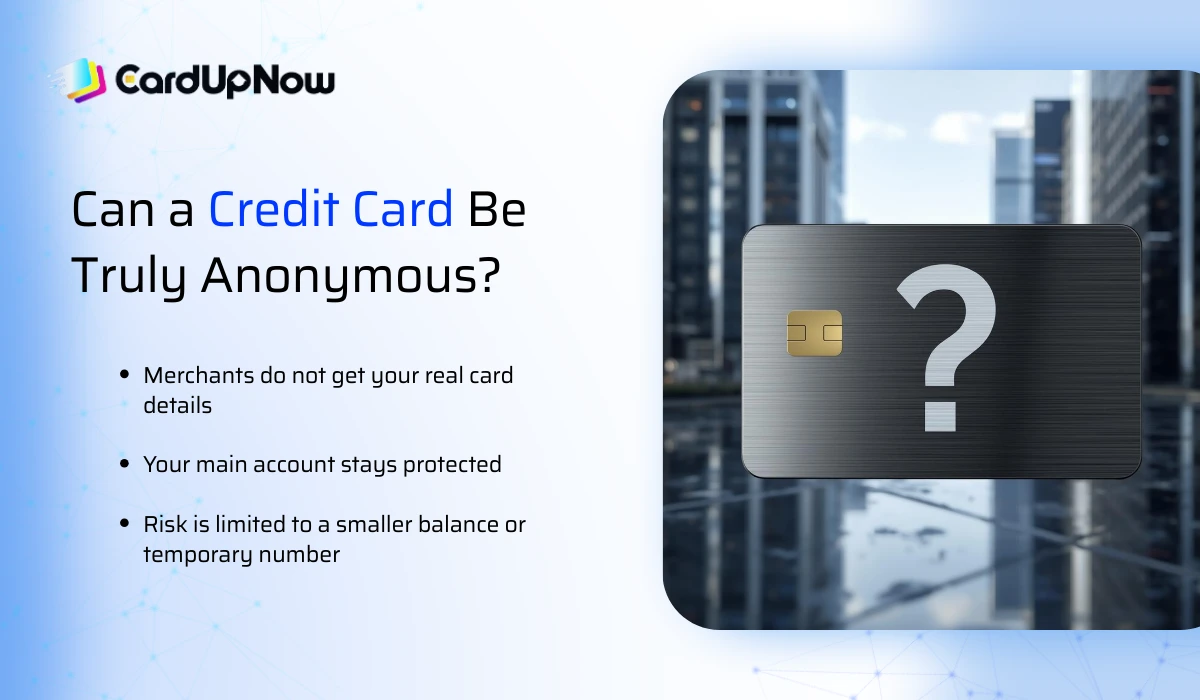
Actually not. Financial systems are regulated. Card issuers need to know who they are dealing with. That is why a fully anonymous credit card does not exist in the strict sense.
What does exist is something more practical:
- Merchants do not get your real card details
- Your main account stays protected
- Risk is limited to a smaller balance or temporary number
For most people, this level of privacy is more than enough.
The Types of Cards People Call “Anonymous”
When people talk about anonymous credit cards, they are usually not talking about one specific product. The term is used loosely to describe a few different types of cards that offer more privacy than a traditional credit card. Each option works in its own way and provides a different level of protection and control. Understanding these differences is important, because what feels “anonymous” to one person may simply be a prepaid or virtual solution to another.
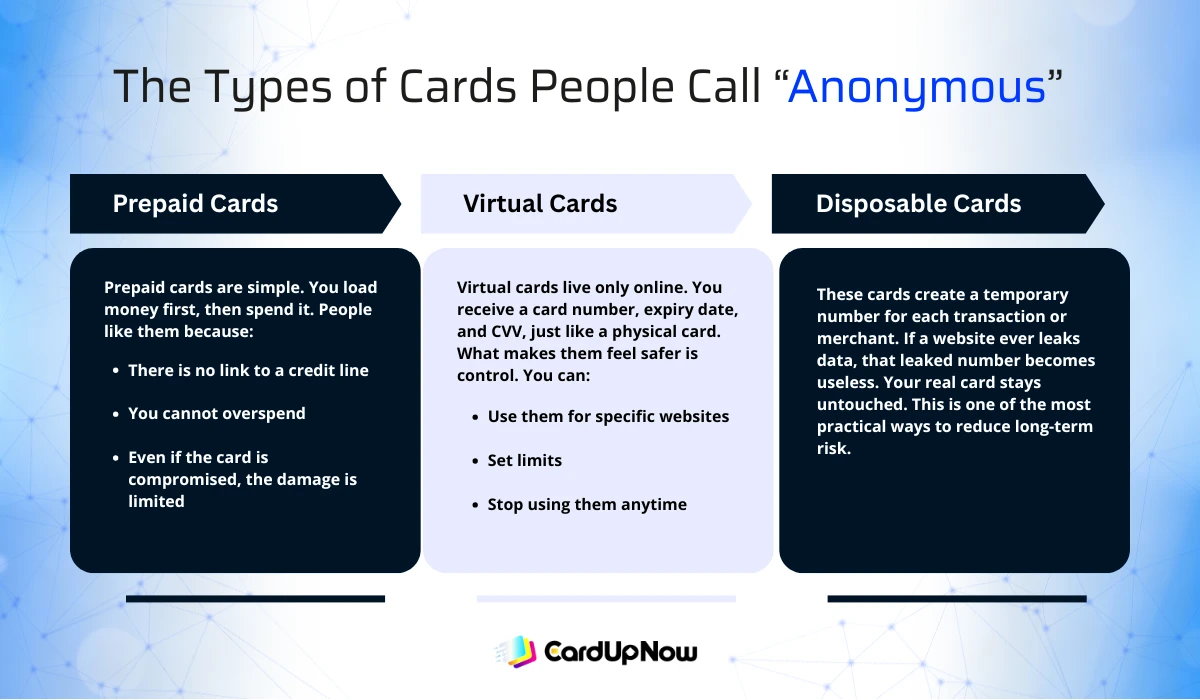
Before choosing any option, it helps to know how these cards are commonly grouped and what role each one plays in online payments.
Prepaid Cards
Prepaid cards are simple. You load money first, then spend it. People like them because:
- There is no link to a credit line
- You cannot overspend
- Even if the card is compromised, the damage is limited
They are often used for small purchases or one-time payments.
Virtual Cards
Virtual cards live only online. You receive a card number, expiry date, and CVV, just like a physical card. What makes them feel safer is control. You can:
- Use them for specific websites
- Set limits
- Stop using them anytime
They are popular for subscriptions and international payments.
Disposable or Masked Cards
These cards create a temporary number for each transaction or merchant. If a website ever leaks data, that leaked number becomes useless. Your real card stays untouched. This is one of the most practical ways to reduce long-term risk.
How These Cards Actually Protect You
When you use a privacy-focused card, the merchant never touches your real financial details. You enter the temporary or prepaid card information. The payment is processed, and the connection ends there. Even if something goes wrong later, your main card is not exposed. Think of it as using a shield between your money and the internet.
Why People Choose These Cards
Most users are not thinking about anonymity in a dramatic way. They want:
- Less stress when paying online
- Fewer surprises from subscriptions
- Protection from unknown or new websites
- A cleaner way to manage digital spending
It is about comfort and control, not secrecy.
The Trade-Offs You Should Know About
Privacy-focused cards are useful, but they are not perfect. Like any payment method, they come with a few limitations that are important to understand before using them regularly.
- One common issue is acceptance. Some websites, platforms, or merchants do not allow prepaid or virtual cards, especially for high-value purchases or long-term subscriptions. In those cases, a traditional card may still be required.
- Refunds can also be slower or more complicated. Because these cards are often prepaid or temporary, getting money back may take more time than usual, and in certain situations, refunds may not be possible at all.
- Another thing to keep in mind is balance protection. If a prepaid card is emptied or expires, the remaining funds may be difficult or impossible to recover. This is why many people avoid storing large amounts on these cards.
Understanding these trade-offs helps you decide when a privacy-focused card makes sense and when using a regular credit or debit card is the better option.
When Using an Anonymous-Style Card Makes Sense
Anonymous-style or privacy-focused cards are most useful in situations where trust is limited or where you prefer to keep your main payment details private. Instead of replacing traditional cards, they are often used as a secondary layer of protection.
One common use case is online subscriptions. Many people use these cards to avoid unwanted renewals or complicated cancellation processes. By limiting the balance or using a temporary card number, you stay in control of future charges.
They are also widely used for digital services and tools, especially new platforms or software that users have not tested before. Using a separate card reduces risk if the service later turns out to be unreliable.
International websites are another area where these cards make sense. Different regions follow different security standards, and a privacy-focused card helps reduce exposure when paying across borders.
For trial offers and short-term access, these cards provide peace of mind. You can test a service without worrying about surprise charges after the trial period ends.
Many users also rely on anonymous-style cards for adult content and services. In this context, the benefit is privacy rather than secrecy. These cards help keep sensitive purchases separate from personal bank statements, shared family accounts, or business finances, while still staying within legal and ethical boundaries.
Overall, these cards are most valuable when you want flexibility, control, and reduced exposure, especially in situations where long-term trust has not yet been established.
Anonymous Cards vs Traditional Credit Cards
Traditional credit cards are powerful but exposed. They work everywhere, but they also share a lot of information.
Privacy-focused cards trade a bit of convenience for peace of mind. Many people use both, depending on the situation.
Final Thoughts
An anonymous credit card is not about hiding. It is about being careful. In a world where online payments are everywhere, using tools that limit unnecessary exposure simply makes sense. Understanding how these cards work helps you use them responsibly and confidently.
For many people, that small layer of separation makes online payments feel safer again.
FAQ About Anonymous Credit Card
Are anonymous credit cards legal to use?
Yes, anonymous-style or privacy-focused credit cards are legal in most countries when used responsibly. They are designed to protect your personal and financial information, not to bypass laws. While merchants may see limited details, card issuers still follow financial regulations and compliance rules.
Can I use an anonymous credit card for subscriptions and recurring payments?
In many cases, yes. These cards are commonly used for subscriptions, trial offers, and digital services. However, some platforms may reject prepaid or virtual cards. It is always a good idea to check the card type and the website’s payment policy before relying on it for recurring payments.
Does using an anonymous credit card mean my transactions are completely untraceable?
No. Anonymous credit cards do not make transactions invisible. They simply reduce how much personal information is shared with merchants. Payment networks and card issuers can still track transactions to meet legal and security requirements.