As online payments become more common, card-related fraud has also evolved in quiet but aggressive ways. One term that often comes up in payment security discussions is BIN attack. Many users come across this term only after facing sudden card declines, temporary card blocks, or unexpected security actions from a card provider.
Although the name sounds technical and alarming, a BIN attack is easier to understand than it appears. It is not about hacking a specific person’s card, but about abusing patterns within card systems at scale. Once you understand how it happens and why providers react the way they do, the whole concept becomes much clearer and far less confusing.
What Is a BIN Attack?
A BIN attack is a type of automated card fraud where attackers try to guess valid card details in large volumes. The term BIN stands for Bank Identification Number, which is the first six digits of a card number. These digits reveal the card network and the issuing institution.
In a BIN attack, fraudsters already know the BIN. Using software or bots, they generate thousands of combinations for the remaining card digits, expiry dates, and CVV numbers. These combinations are then tested on online payment forms that have weak protection. The goal is not to target one specific user, but to find any active card that passes a transaction check.
Why BIN Numbers Matter in Card Payments
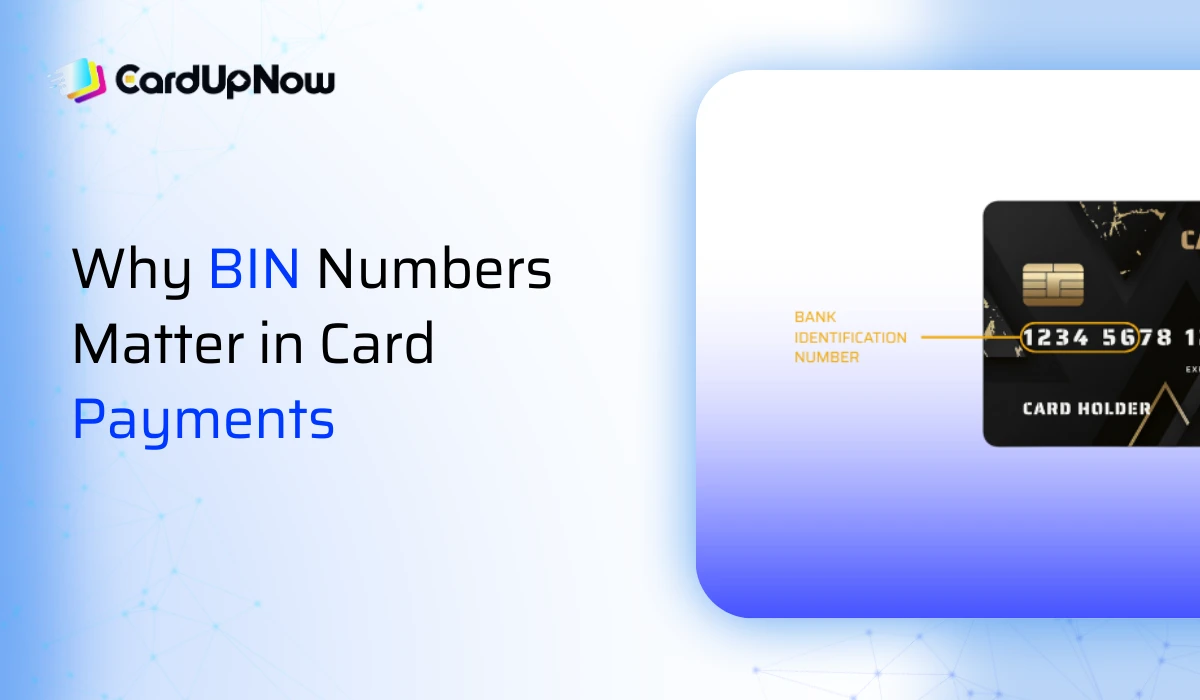
BIN numbers play an important role in how payment systems work. When a transaction is made, the BIN helps identify the card type, issuing institution, and routing rules. This information allows payments to be processed quickly and accurately.
Because BINs follow a structured and predictable format, attackers can limit their guessing range. Instead of guessing completely random numbers, they focus on a specific BIN and test millions of variations within that range. This makes attacks faster and more efficient, especially when automation is involved. The BIN itself is not secret, but its structure can be abused when combined with poor merchant-side security.
How a BIN Attack Actually Works
A BIN attack usually happens silently in the background and does not start with a visible warning. Attackers begin by selecting a BIN they want to test. This could belong to a specific card network, region, or issuer.
Automated scripts then generate card number combinations linked to that BIN. These combinations are tested on online merchants, subscription platforms, or payment gateways that allow repeated attempts. Small transactions are often used to check which cards are active.
Once a valid combination is found, attackers may try higher-value transactions or move on to testing more cards. The entire process relies on speed and volume rather than precision.
Common Signs of a BIN Attack
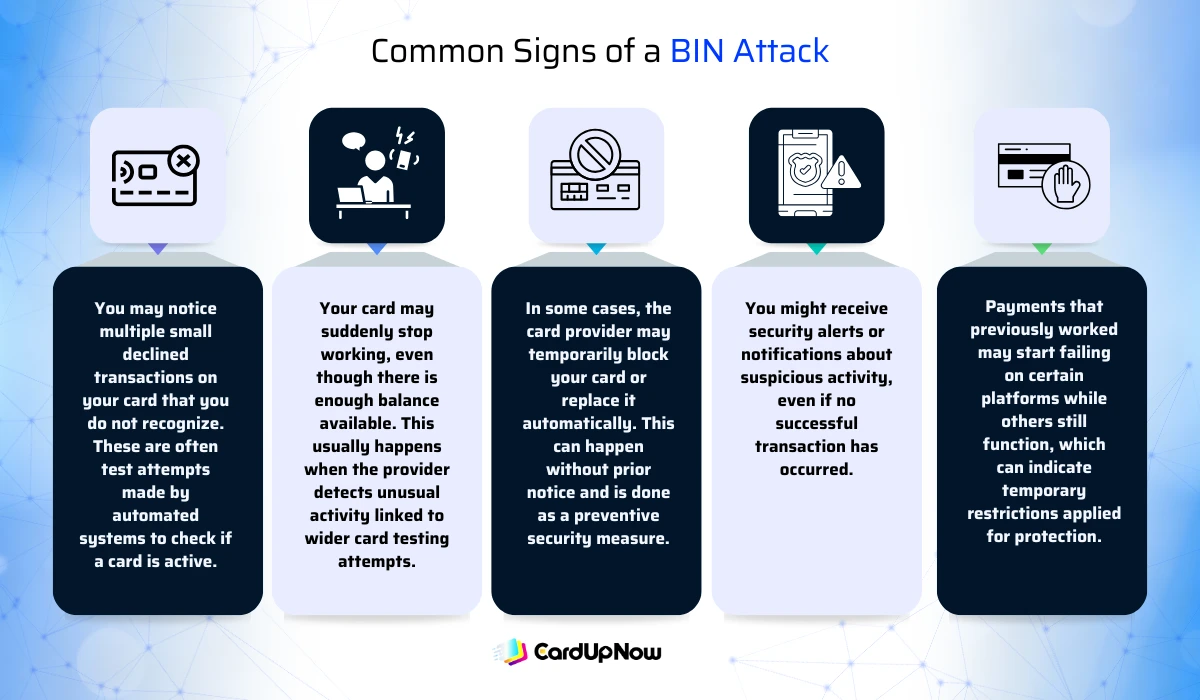
- You may notice multiple small declined transactions on your card that you do not recognize. These are often test attempts made by automated systems to check if a card is active.
- Your card may suddenly stop working, even though there is enough balance available. This usually happens when the provider detects unusual activity linked to wider card testing attempts.
- In some cases, the card provider may temporarily block your card or replace it automatically. This can happen without prior notice and is done as a preventive security measure.
- You might receive security alerts or notifications about suspicious activity, even if no successful transaction has occurred.
- Payments that previously worked may start failing on certain platforms while others still function, which can indicate temporary restrictions applied for protection.
These interruptions can feel frustrating, but they usually mean that fraud detection systems are actively working to protect your funds before real damage happens.
Why Online and Virtual Cards Appear in BIN Attacks
Virtual cards and online-use cards are often mentioned in BIN attack discussions because they are widely used on digital platforms. These cards are active in online environments where payment testing can happen quickly.
This does not mean virtual cards are weak. Physical cards used online are exposed in the same way. The real factor is where the card is used, not what form it takes. Any card that supports online payments can be tested if a merchant’s security controls are weak.
How Card Providers Detect BIN Attacks
Card providers rely on advanced monitoring systems to detect unusual transaction patterns. When thousands of failed attempts are linked to the same BIN range, automated alerts are triggered.
At this stage, providers may block affected cards, restrict certain transaction types, or regenerate card details. These steps help stop the attack from spreading and protect users from unauthorized charges. Strong fraud detection systems work continuously in the background and are one of the most important defenses against BIN attacks.
How Modern Virtual Card Systems Reduce Risk
Modern virtual card systems are built with security-first design. Features like instant card replacement, transaction limits, and real-time monitoring make BIN attacks less effective.
Even if an attacker guesses a valid card number, additional controls can block suspicious activity immediately. This reduces exposure and protects user balances. And we all know, security today depends more on infrastructure and monitoring than on the physical presence of a card.
BIN Attacks and CardUpNow
CardUpNow uses structured monitoring and control systems to reduce exposure to automated card testing. Unusual transaction behavior is flagged early, allowing quick response before users are affected.
Virtual cards issued through CardUpNow can be managed easily, making it simple to replace card details or control usage if needed. These measures help maintain smooth online payments while keeping security strong behind the scenes.
Frequently Asked Questions About BIN Attacks
What does BIN mean in a BIN attack?
BIN refers to the Bank Identification Number, which is the first six digits of a card number used to identify the issuer and network.
Can a BIN attack steal my money?
Most BIN attacks are blocked before any funds are lost. Monitoring systems usually stop suspicious activity early.
Are virtual cards more exposed to BIN attacks?
No. Any card used online can be tested. Risk depends on security controls, not card format.
Why do card providers block cards during BIN attacks?
Cards are blocked as a preventive step to stop unauthorized use while systems respond to the threat.
Can users stop BIN attacks themselves?
Users cannot stop attacks directly, but choosing secure providers reduces exposure significantly.
At the end….

A BIN attack is a technical form of card fraud that targets payment systems at scale. While the term can sound alarming, strong detection tools and modern controls make serious damage uncommon.
Understanding how BIN attacks work helps users trust the security measures in place. With well-designed virtual card systems and proactive monitoring, online payments remain safe, practical, and reliable.