Online payments are part of everyday life. People use cards to pay for subscriptions, online shopping, software tools, and digital services. Traditional credit cards still work well for many situations, but they also come with risks when used online. This is where understanding the Virtual Credit Card Benefits becomes important.
Sharing the same card details across multiple websites can expose financial information if a platform experiences a data breach or security problem. Many users also struggle with subscription management because recurring charges continue even after a service is no longer needed.
Virtual credit cards solve many of these problems. They are designed to make online payments safer, easier to control, and more flexible. Instead of using the same card everywhere, users can create digital card numbers that work just like a regular credit card.
Because of these advantages, virtual credit cards are now widely used by freelancers, businesses, online shoppers, and marketers.
Let’s have a look at the most important virtual credit card benefits and explain why they have become a popular tool for secure digital payments.
1. Better Security for Online Payments
One of the biggest benefits of virtual credit cards is improved security.
When people use their main credit card on many websites, their financial information becomes exposed to multiple platforms. If one of those platforms experiences a data breach, the card details may be compromised.
Virtual credit cards reduce this risk by allowing users to create separate card numbers for different transactions or services.
If a specific card is ever compromised, it can be canceled immediately without affecting the main account. This limits the potential damage and helps protect the user’s financial information.
2. Protection From Subscription Charges
Subscription services are common today. Streaming platforms, productivity tools, and software services often require a credit card to start a trial or activate a membership.
Many users forget to cancel these subscriptions on time. As a result, they continue to get charged every month.
Virtual credit cards help solve this problem. Users can create a dedicated card for each subscription. If the service is no longer needed, the card can simply be disabled.
3. Easy Card Management
Managing traditional credit cards can be difficult when multiple services are involved. With a physical card, all payments are connected to the same card number.
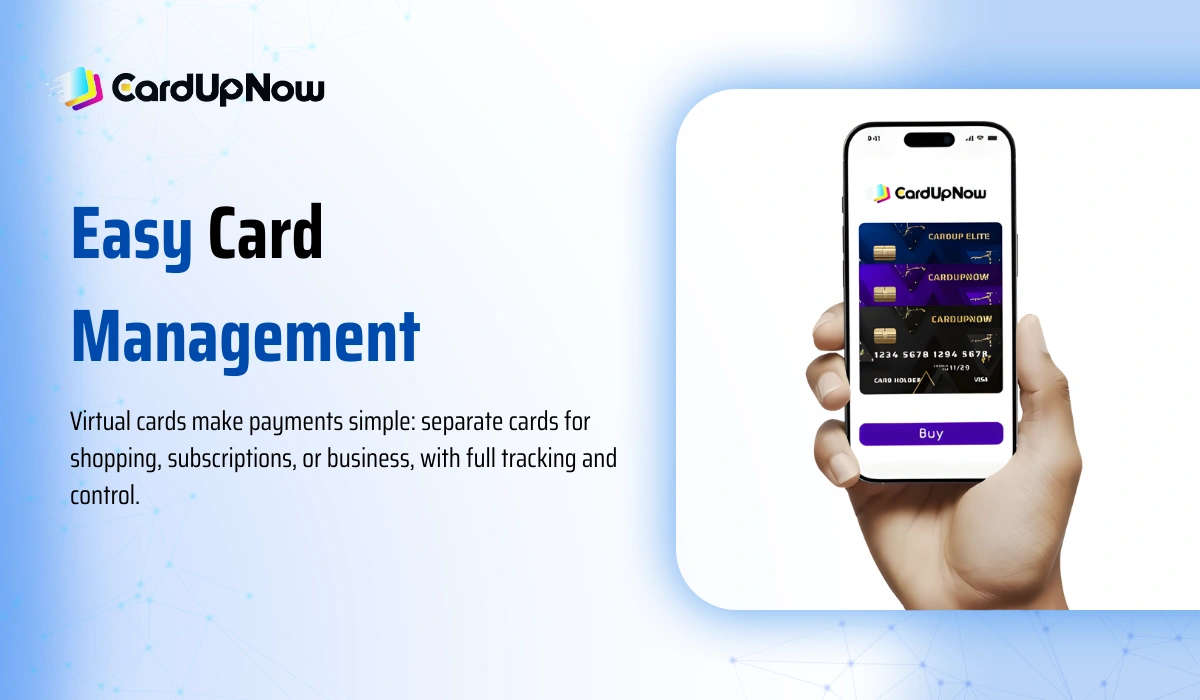
Virtual credit cards make management much easier.
Users can create different cards for different purposes. For example, one card can be used for online shopping, another for subscriptions, and another for business tools.
Because each card is separate, transactions are easier to track. This helps users understand exactly where their money is going.
Many platforms also provide dashboards where users can view payment history and control card activity.
4. Instant Card Creation
Another important benefit is the ability to create cards instantly.
Traditional credit cards often require an application process, approval, and delivery time before the card can be used. This can take several days or even weeks.
Virtual credit cards can be generated within seconds. As soon as the card is created, the user receives the card number, expiration date, and security code.
This allows immediate use for online payments.
For people who need a card quickly to pay for digital services, advertising platforms, or online tools, instant card creation can be extremely useful.
5. Better Control Over Spending
Virtual credit cards give users more control over how their money is spent.
Some platforms allow users to set spending limits for each card. This prevents transactions that exceed the assigned budget.
For example, a user may create a card with a limited balance for a specific service. Even if the platform tries to charge more than expected, the transaction will not go through.
This feature is especially useful for freelancers, marketers, and businesses that need to manage multiple online expenses.
6. Safer Payments on Unknown Websites
Many people hesitate to shop on unfamiliar websites because they are not sure how secure the platform is.
Using a primary credit card on unknown sites can be risky. If the site stores card details without proper security, those details may be exposed.
Virtual credit cards provide a safer option. Users can create a temporary card and use it only for that purchase.
If the website turns out to be unreliable, the card can be canceled immediately after the transaction. The main credit card information remains protected.
7. Easier Expense Tracking
Tracking expenses is easier when separate virtual cards are used for different purposes.
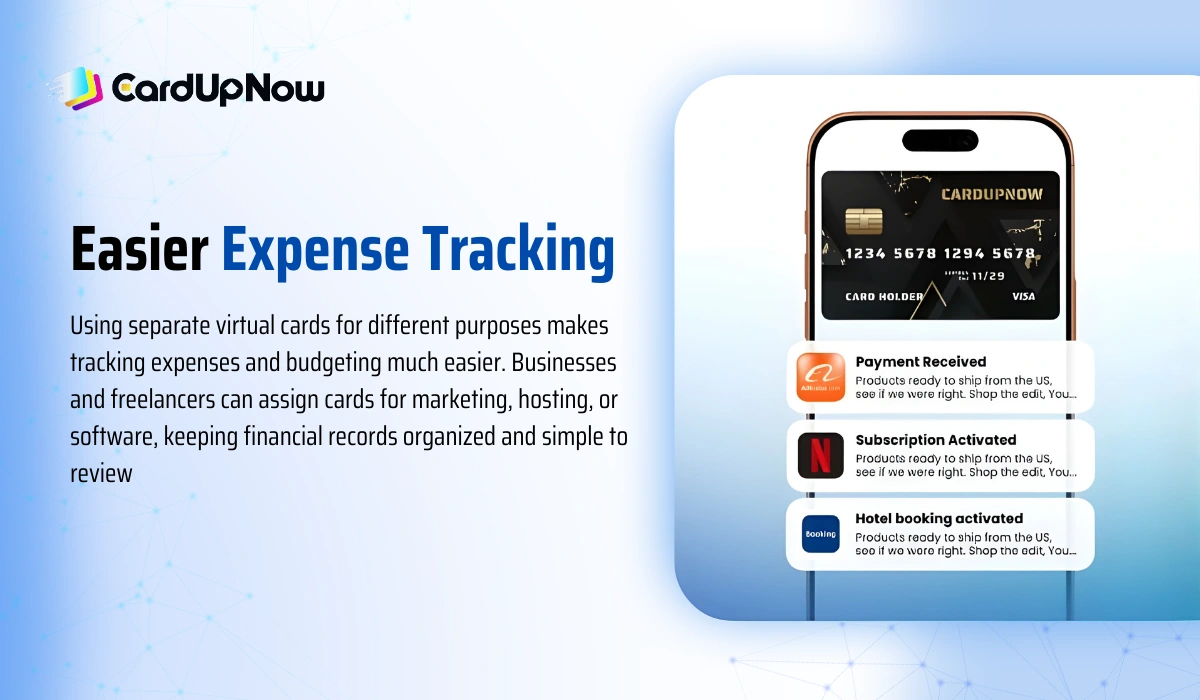
Instead of reviewing a long list of transactions from one card, users can identify payments based on the card used for each category.
For example, a business might use one card for marketing tools, another for hosting services, and another for team software.
This structure makes financial tracking more organized and simplifies budgeting.
Freelancers and business owners often use this approach to keep their financial records clear and easy to review.
8. Faster Response to Fraud
Fraud can happen even with secure systems. When it happens with a traditional credit card, the user must contact the bank and wait for a replacement card.
During this process, many payments may be interrupted because the original card becomes inactive.
Virtual credit cards provide a faster solution. If suspicious activity appears, the user can disable the card instantly from the dashboard.
A new card can then be generated immediately for future payments. This reduces downtime and helps maintain uninterrupted services.
9. Ideal for Digital Businesses and Freelancers
Virtual credit cards are particularly useful for people who work online.
Freelancers often pay for cloud software, marketing tools, domain services, and other digital platforms. Using a single credit card for all these services can become difficult to manage.
Virtual cards allow them to separate these payments and keep their financial activities organized.
Businesses also benefit from assigning different cards to different departments or team members. This improves financial transparency and helps control budgets more effectively.
Conclusion
Virtual credit cards are transforming the way people handle online payments. They offer a smarter alternative to traditional credit cards by providing better security, easier management, and greater control over spending.
By generating unique card numbers for different transactions, users can protect their financial information and reduce the risk of fraud. Virtual cards also simplify subscription management and help organize digital expenses.
As online payments continue to grow, more people are turning to virtual credit cards as a reliable tool for safer and more efficient transactions.
FAQs about Virtual Credit Card Benefits
What is the main benefit of a virtual credit card?
The main benefit is improved security. Virtual credit cards allow users to create separate card numbers for online transactions, which helps protect the main credit card from fraud or data breaches.
Can virtual credit cards be used for subscriptions?
Yes. Virtual credit cards work well for subscriptions because users can assign a dedicated card to each service and disable it if the subscription is no longer needed.
Are virtual credit cards safe for online shopping?
Yes, they provide additional protection because users can create temporary cards and avoid sharing their primary credit card details with multiple websites.
Do virtual credit cards work like normal credit cards?
Yes. They function the same way during transactions and can be used on websites that accept credit card payments.