You are checking out on an online store, everything looks fine, and suddenly the payment page asks for a small three or four digit code. Many people pause at this point and wonder why this extra step exists. That small code is called the card verification value, and it plays a very important role in keeping online payments safe.
Online payments move fast, but behind the scenes, your card information passes through multiple systems before a transaction is approved. Relying only on a card number and expiry date would make digital payments risky and easy to misuse. This is why the card verification value exists. It works as a quiet security check that helps confirm the payment is coming from the real cardholder. Knowing how this code works not only clears confusion but also helps you protect your money during everyday online transactions.
What Is Card Verification Value
Card verification value, often shortened as CVV, is a security code printed on debit and credit cards. Its main purpose is to add an extra layer of protection during online and phone payments where the physical card is not used.
The CVV works as proof that the person making the payment actually has access to the card. Unlike the card number, this code is not embossed and is not meant to be stored by merchants. That makes it much harder for fraudsters to misuse leaked card data.
In simple terms, card verification value helps confirm that the payment request is genuine and not coming from stolen card information.
Where to Find the Card Verification Value on Your Card
The location of the card verification value depends on the card network. Still, it is always easy to spot once you know where to look.
For most cards, you will find it in these places:
- Visa, Mastercard, and Discover cards have a three digit CVV printed on the back of the card, near the signature strip
- American Express cards use a four digit code printed on the front, just above the card number
If you are using a virtual card, the CVV is shown inside your card dashboard along with the card number and expiry date. Platforms like CardUpNow display this information securely so users can copy it when needed for online payments.
Why Card Verification Value Is Important
Online payments come with higher risks compared to in-store payments. Anyone can type a card number into a website, but the card verification value adds an extra check.
Here is why CVV is important:
- It reduces online fraud by confirming card possession
- It protects users if card numbers are leaked or stolen
- It helps banks approve genuine transactions more confidently
Since merchants are not allowed to store CVV codes, even a data breach does not expose this critical security detail. This single rule makes card verification value one of the simplest but strongest protections in online payments.
Card Verification Value vs PIN
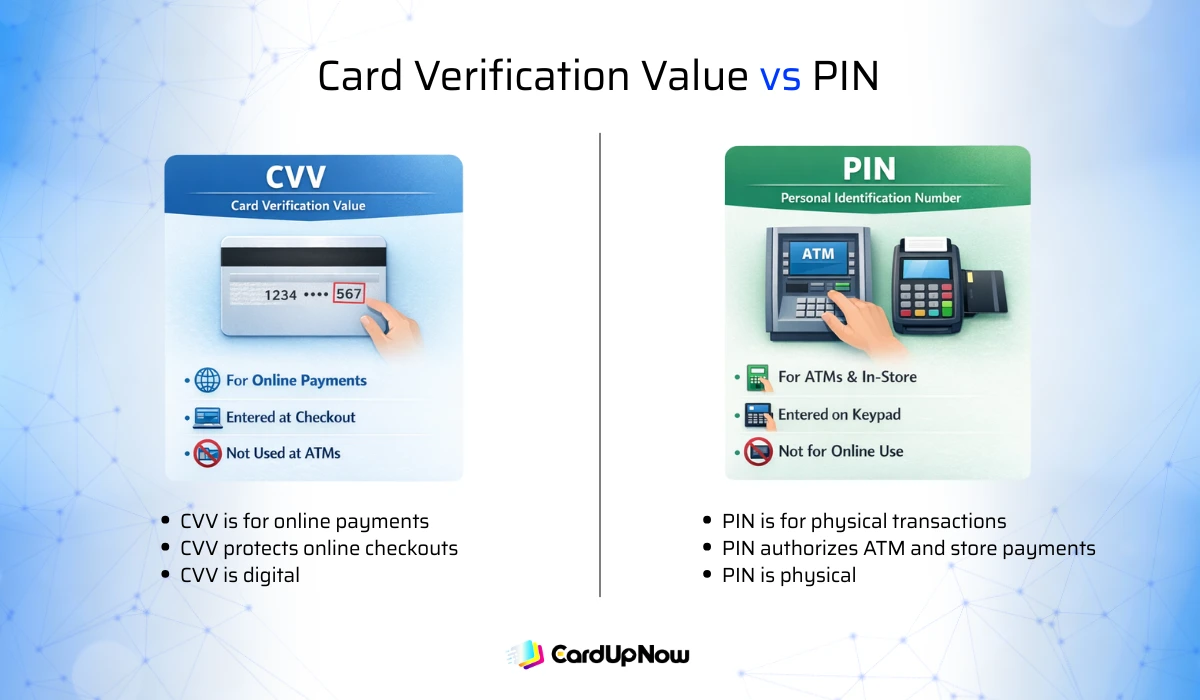
Many people confuse CVV with a card PIN, but they serve completely different purposes. A card PIN is used for ATM withdrawals and in-store card payments where the card is physically present. It confirms the identity of the cardholder during face-to-face transactions.
Card verification value is designed for online and remote payments. It is entered manually during checkout and is never used at ATMs or physical terminals. Understanding this difference helps avoid confusion and improves payment safety.
CVV, CVC, CVV2, and CID Explained
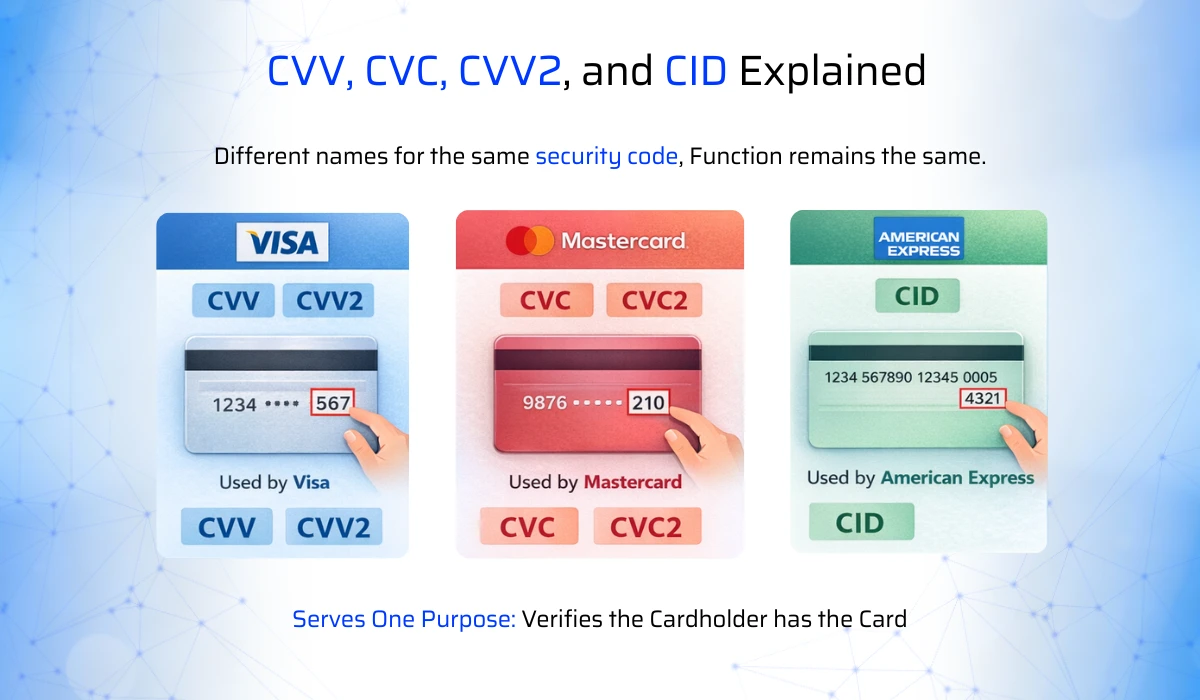
You might notice different names for the same security code. This often creates confusion, but the function remains the same.
Here is a simple breakdown:
- CVV and CVV2 are commonly used by Visa
- CVC and CVC2 are used by Mastercard
- CID is used by American Express
Despite different names, all of these codes serve one purpose. They verify that the person making the payment has access to the actual card.
How Card Verification Value Works During Online Payments
When you enter your card details on a website, the payment system sends the information to the card network and issuing bank. Along with the card number and expiry date, the CVV is also checked.
The bank verifies if the entered CVV matches the one linked to the card. If it matches, the transaction moves forward. If it does not, the payment is declined.
An important thing to know is that the CVV is never saved by merchants. It is checked once and then discarded. This process helps keep your card information secure even after repeated payments.
Card Verification Value and Virtual Cards
Virtual cards also come with a card verification value, just like physical cards. In fact, virtual cards often provide better security for online payments. Some virtual cards use static CVVs, while others offer dynamic CVVs that change over time. This makes stolen details useless after a short period.
With CardUpNow virtual cards, users get instant access to card details including CVV. These cards are ideal for online subscriptions, digital services, and international payments where safety matters most.
Is It Safe to Share Your Card Verification Value
Sharing your card verification value is never safe. This code should only be entered on trusted payment pages during checkout. Common risks include fake websites, phishing messages, and scam calls asking for CVV details. Once shared, fraudsters can attempt unauthorized payments.
If you believe your CVV has been exposed, the safest step is to block the card and request a replacement. Using virtual cards can also reduce damage since they are easier to replace.
Final Thoughts

Card verification value may look like a small detail, but it has a big impact on payment security. It protects users from fraud, helps banks verify transactions, and makes online shopping safer. Understanding how CVV works helps you make smarter payment decisions and avoid common mistakes. If you want even better control and safety for online payments, using virtual cards with secure CVV access is a smart move.
Platforms like CardUpNow make it easier to manage virtual cards and protect your online transactions without complexity.
Card Verification Value FAQs
What is card verification value used for?
Card verification value is used to confirm that the person making an online payment has access to the card, helping banks reduce fraud during card-not-present transactions.
Can someone use my card with only the CVV?
CVV alone is not enough for most payments. Fraud usually requires the card number, expiry date, and sometimes additional authentication from the issuing bank.
Why do online merchants ask for card verification value?
Merchants request CVV to add an extra security check that proves the card is in the user’s possession and reduces unauthorized online transactions.
Why do some websites not require CVV?
Some websites skip CVV entry because the card was verified earlier using tokenization, saved payment methods, or subscription billing systems.
Does card verification value change?
Physical card CVVs stay the same until card replacement. Some virtual cards use dynamic CVVs that change regularly for added online payment security.
Is card verification value required for every online payment?
CVV is commonly required for first-time payments. Saved cards, subscriptions, and tokenized systems may not ask for it again.